
Mandatory AC servicing.
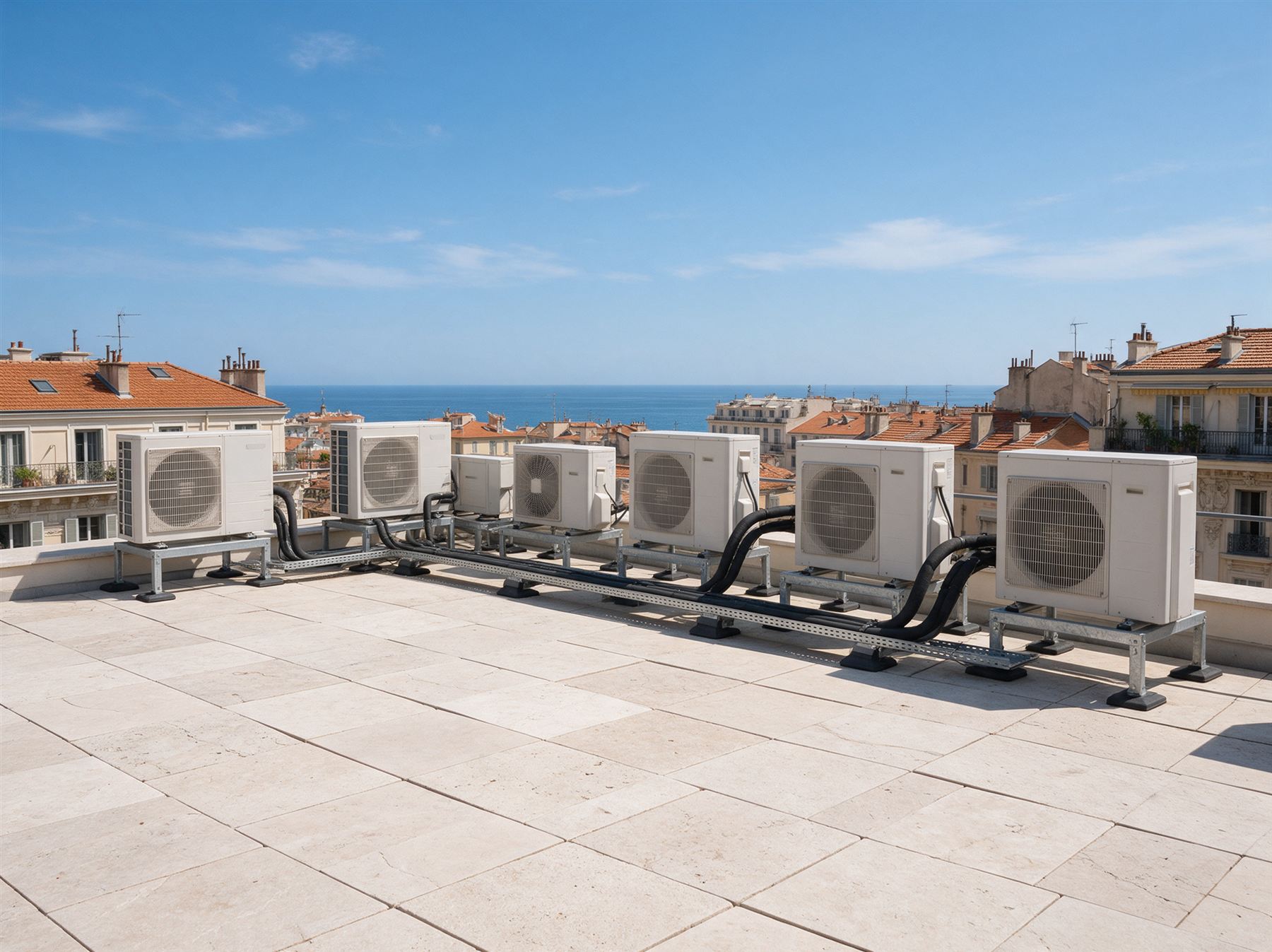
An air conditioner or heat pump rated from 4 to 70 kW must be serviced at least once every two years. Here is what the regulations say, what the technician does, and what you can do yourself between two visits.
Updated on 28 October 2026
What the rules say
- Air conditioners and heat pumps with a rated output of 4 to 70 kW must be serviced periodically. Those that only produce hot water for a single home are not concerned (French Environment Code, article R224-44).
- No more than two years between two services, the first no later than two years after installation or replacement, by a person with the required qualifications (R224-44-3).
- For an individual system, the occupant arranges the servicing, unless the lease says otherwise; for a shared system, the owner or the building's co-owners' association (R224-44-1).
- The technician issues a service certificate within fifteen days of the visit. You keep it available in case of an inspection (R224-44-4). ADEME advises keeping it for at least two years, to show in case of an inspection, to the landlord or to the insurer after a claim.
These rules come from decree no. 2020-912 of 28 July 2020. The articles quoted have been in force since 30 July 2020 (Légifrance, version in force on 27 October 2026).
Above 70 kW: an inspection
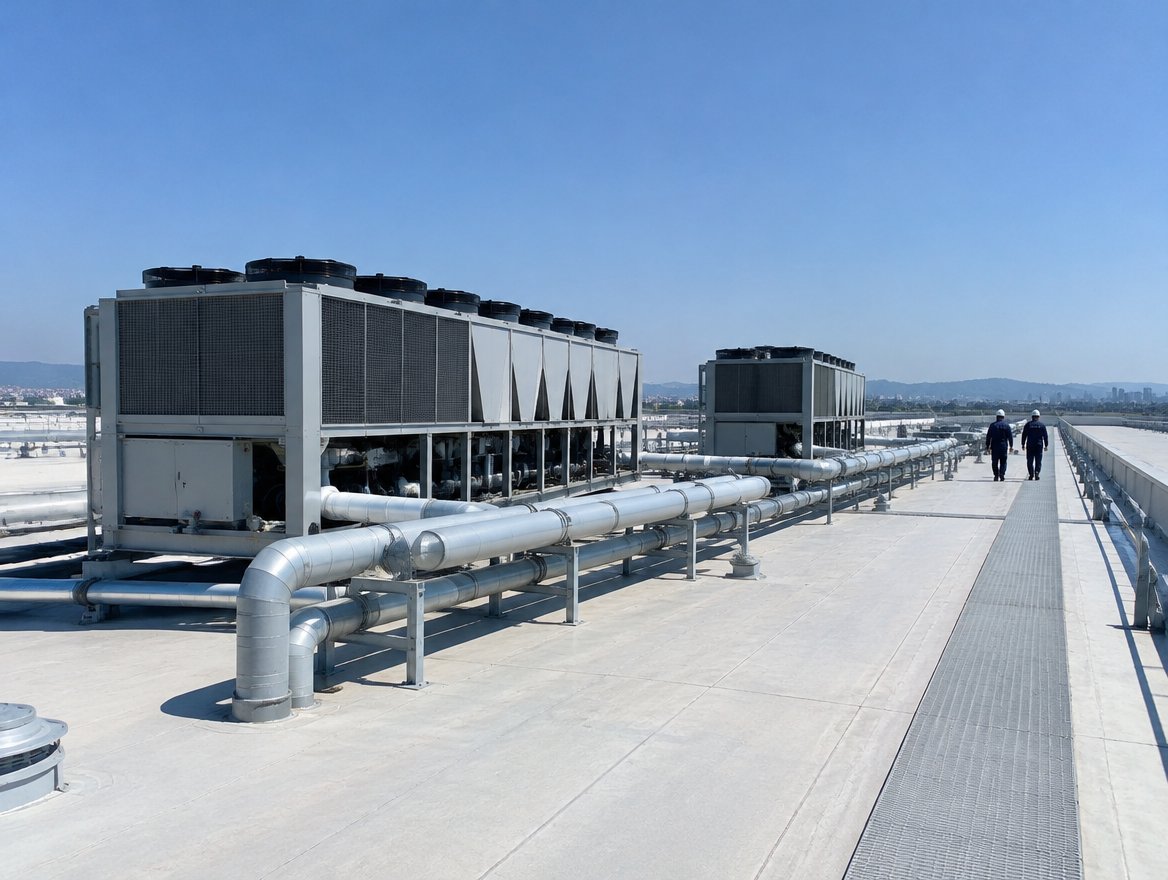
Systems above 70 kW are subject to an inspection at least every five years, or every ten years when an ISO 50001-certified energy management system covers them. It is arranged by the owner or the co-owners' association (R224-45-1 and R224-45-2). Since 1 January 2025, only a body accredited to ISO/IEC 17020 as a type A body may carry it out, and the inspector must have no link liable to undermine their independence with the owner, the company that installed the system or the one that maintains it (R224-45-4 and R224-45-5): so we cannot inspect the systems we install or maintain. For the upkeep of these installations, see our HVAC maintenance.
The leak check
Servicing includes a leak check of the refrigerant circuit, except for equipment already covered by the European regulation on fluorinated gases, which has its own checks (R224-44-2).
Leak checks are mandatory when the equipment contains at least 5 tonnes CO2 equivalent of the fluorinated gases in Annex I, including HFCs such as R32, or at least 1 kg of those in Section 1 of Annex II, the unsaturated hydro(chloro)fluorocarbons such as HFOs. Hermetically sealed equipment labelled as such is exempt below 10 tonnes CO2 equivalent, or below 2 kg for Annex II gases (EU Regulation 2024/573, article 5). For HFCs and PFCs above 5 tonnes CO2 equivalent, the French Environment Code requires this check at commissioning, then periodically, and after any change to the circuit, by an operator holding a refrigerant handling certificate (article R543-79).
What the technician does
The regulation provides for a check of the system, the leak check, cleaning if needed, adjustments, and advice on use and on any replacement (R224-44-2). ADEME adds that the technician looks for major faults, such as a refrigerant leak.
What we do at each visit (filters, coil, condensate drain, outdoor unit, operating measurements) is set out on our air conditioning servicing page, with its price. Our F-gas certificate is presented on the Qualifications page.
Between two visits, what you can do
- Clean or replace the filters every six months (ADEME).
- Dust the air vents and clean them with soapy water (ADEME).
- Make sure nothing blocks the airflow around the outdoor unit: leaves, objects (ADEME).
Never take the unit apart yourself: you could release the refrigerant, a powerful greenhouse gas (ADEME).
Mandatory or recommended?
The law sets a maximum: two years between two services. ADEME points out that you can also have a professional come every year, or take out a service contract covering more. For our part, we recommend one visit a year, ideally in spring, before the hot weather: this is advice, not an obligation.
An AC unit not working properly between two visits? See our guides AC no longer cooling and AC leaking water.
Sources
- Légifrance, Code de l'environnement, articles R224-44 à R224-44-5, version in force on 27 October 2026 (in French).
- Légifrance, Code de l'environnement, articles R224-45 à R224-45-9, version in force on 27 October 2026 (in French).
- Légifrance, Code de l'environnement, article R543-79, version in force on 27 October 2026 (in French).
- EUR-Lex, Regulation (EU) 2024/573 of 7 February 2024 on fluorinated greenhouse gases, article 5, published on 20 February 2024, accessed on 28 October 2026 (in French).
- Légifrance, décret n° 2020-912 du 28 juillet 2020 (in French).
- ADEME, « L'entretien des pompes à chaleur et des climatiseurs », fact sheet, October 2023, accessed on 27 October 2026 (in French).
- ADEME, « Comment choisir sa climatisation ? », advice published on 29 May 2026, accessed on 27 October 2026 (in French).
- ADEME, « Comment garder son logement frais tout l'été ? », guide, September 2026, accessed on 27 October 2026 (in French).